
Invited Speakers
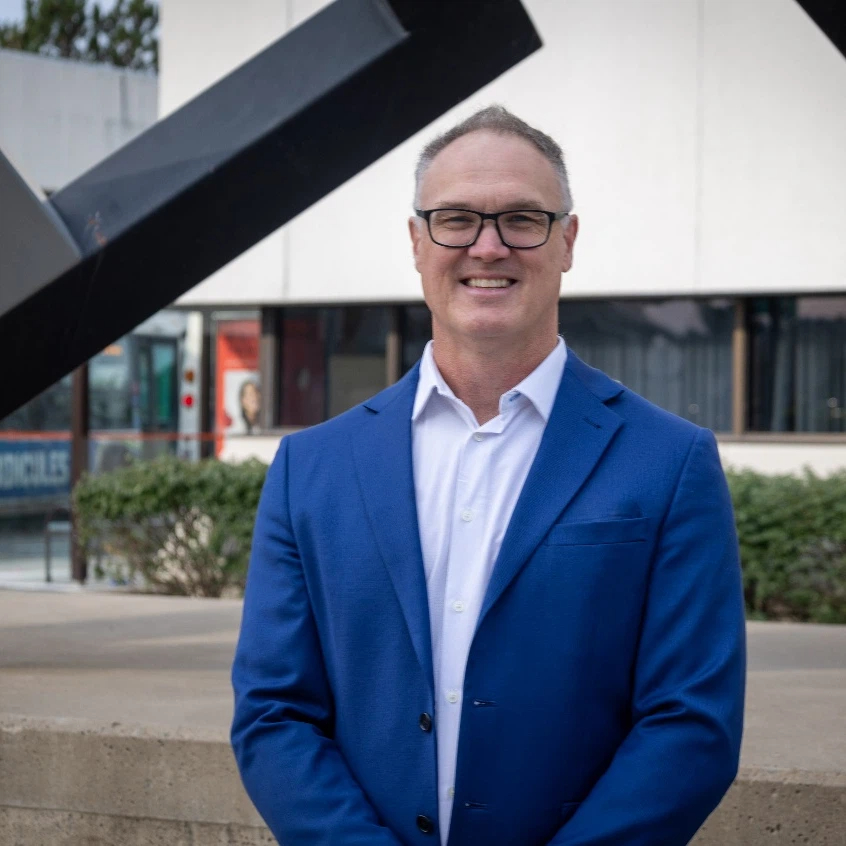 Prof. Jean-Sébastien Dessureault
Université du Québec à Trois-Rivières, Canada
Professor Jean-Sébastien Dessureault is a
faculty member at the Université du Québec à
Trois-Rivières (UQTR), where his research focuses on
agentic artificial intelligence (AI agents) based on
large language models (LLMs). Leading a team of
master’s and doctoral students, he designs
intelligent agents capable of interacting and making
decisions in geopolitical simulations, robotic
systems, and business environments. His work also
encompasses the development of novel metrics to
assess the ethics, performance, and robustness of
these agents, alongside an active exploration of
quantum artificial intelligence. His publications
span diverse topics, including machine learning,
clustering, dimensionality reduction, and large
language models.
He is affiliated with the INSTINT Laboratory
(mathematics and computer science) and the
LSSI (electrical engineering and computer science),
while serving as a co-researcher at the Chair on
Democracy, Cohesion, and Shared Values in Quebec and
the CADENCE Laboratory in educational sciences—all
based at UQTR.
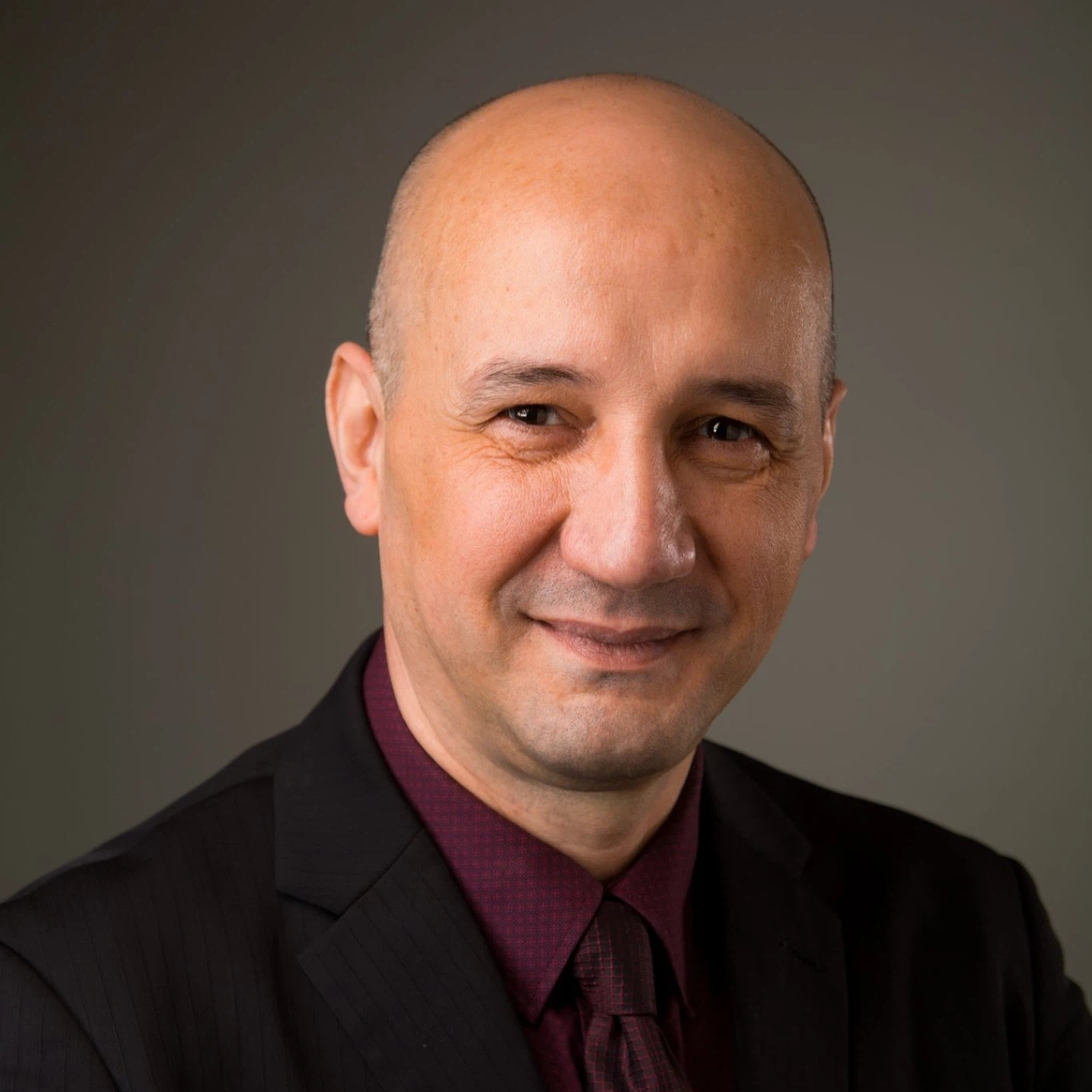 Prof. Farid Nait-Abdesselam
Université Paris Cité, France
Farid Naït-Abdesselam is a Full Professor
at Université Paris Cité. He received the State
Engineering degree from the University of Science
and Technology Houari Boumediene, Algeria, in 1993,
an M.S. degree from Université René Descartes [now
Université Paris Cité], France, in 1994, and a Ph.D.
degree from Université de Versailles
Saint-Quentin-en-Yvelines [now Paris-Saclay
University], France, in 2000, all in Computer
Science.
His research focuses on secure communication
systems, network resilience and optimization,
intrusion detection, and adaptive defense strategies
in complex, constrained, and heterogeneous
environments. He has authored over 180 peer-reviewed
publications, edited two scientific books, and
contributed several book chapters on advanced topics
including network security, malware forensics, and
blockchain technology. His work bridges theoretical
foundations and practical deployments across mobile,
vehicular, drone, and large-scale networked systems.
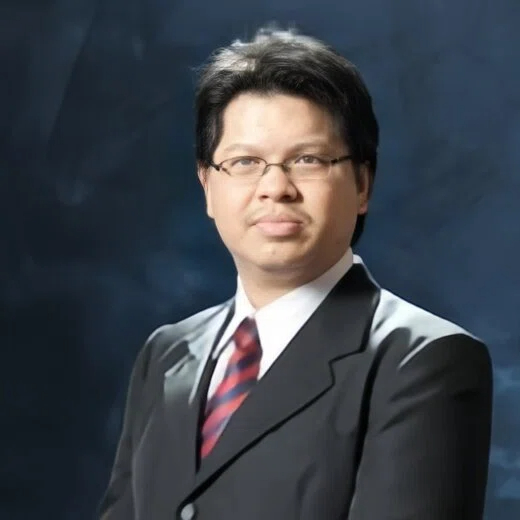 Prof. S.M.F.D Syed Mustapha
Zayed University, UAE
Syed Malek Fakar Duani is a professor in
the Information System and Technology Management
Department, College of Technological Innovation,
Zayed University. He has been teaching for more than
20 years in the area of computer science and
information technology at postgraduate and
undergraduate levels. His research area has been in
the area of knowledge management (building knowledge
sharing system), information retrieval (text
retrieval and text extraction) and artificial
intelligence (knowledge modelling and reasoning –
ontology, CBR, Qualitative Reasoning). His current
research is on building community learning platform
for knowledge sharing, text extraction from news
text and exploring techniques in building ontology
in a fully automated mode. He has vast experiences
in academic management and involved at various
levels of academic positions such as head of
department, deputy dean, deanship (7 years) and vice
president (operation and technology - 4.5 years). He
current research interest is on developing suitable
approach in designing and developing knowledge
sharing tools. He had supervised several PhD and
Master students in the area of Knowledge Management,
Artificial Intelligence and Information Retrieval.
 Assoc. Prof. Sabrina Ahmad
Universiti Teknikal Malaysia Melaka, Malaysia
Dr. Sabrina Ahmad is an Associate Professor of
Software Engineering at the Faculty of Information
and Communication Technology, Universiti Teknikal
Malaysia Melaka (UTeM). She earned her PhD in
Computer Science from The University of Western
Australia, where her work examined how effective
requirements engineering and negotiation practices
shape the success of complex software systems.
With more than two decades of experience across
academia, research leadership, and industry
collaboration, Dr. Ahmad has been deeply involved in
the evolution of information systems education and
practice. She has held a range of academic and
administrative positions, including Head of the
Software Engineering Department, Coordinator of the
Centre of Excellence for Advanced Computing
Technology, and Deputy Dean (Research and
Postgraduate Studies). These experiences have
strengthened her commitment to advancing research
quality while ensuring practical relevance.
Her research focuses on requirements engineering,
software quality, human-centered system design, and
the responsible application of intelligent and
data-driven approaches in information systems. At
the heart of her work is a sustained interest in how
thoughtful system design supports better
decision-making in increasingly complex digital
environments.
Dr. Ahmad has led and contributed to numerous funded
research and consultation projects and has published
widely in international journals and conferences.
She also serves the scholarly community through
editorial and program committee roles. A Certified
Professional Requirements Engineer, Certified
Tester, and Certified Professional IT Architect, she
continues to advocate for closer collaboration
between researchers and practitioners.